Crisp, clear communication is a must-have skill for effective leadership. All the great leaders I know of have a repertoire of insightful sayings that capture values, provide advice, and set direction. These distilled sayings get to the core of their messages and are typically memorable and impactful.
This article shares some of my favorite and most-used aphorisms to help others improve their leadership impact.
Monkeys vs Rocks
Which of these two requests are you more likely to say yes to?
- Lifting a 20 kg rock from point A to point B
- Pet-sitting a monkey for two weeks
I can almost picture you nodding along in agreement with the rock task while vehemently shaking your head in disagreement at pet-sitting a monkey1. Rock problems are clear, well-defined, and straightforward to resolve; it is evident what needs to be done, who needs to do it, and when it should be completed. In contrast, monkey problems are unclear, poorly defined, and challenging to address. You don’t even know where to start, and they are filled with uncertainty.
When is this useful?
It is most helpful in up-leveling problem framing, fostering ownership, and boosting confidence. It is also great for coaching and turning folks into problem solvers because it helps people see new perspectives. It helps them realize that they haven’t taken the time to understand the problem. I typically introduce and discuss the metaphor with my reports; when scenarios emerge, we explore ways to model converting monkeys into rocks.
Tips
- A career accelerant is converting monkeys into rocks.
- In all you do, never turn rocks into monkeys!
- How To Manage Up – Lessons From Scaling Teams at Credit Karma & Lyft.
- Monkeys and Rocks with Matt Greenberg.
Don’t miss the next post!
Subscribe to get regular posts on leadership methodologies for high-impact outcomes.
3Ws: Who, What, and When
The who, what, and when should be clear for any critical task. This clarity ensures everyone is on the same page and stakeholders know who is responsible for delivery. Conversely, the desired outcome is rarely achieved whenever any W is unclear.
When is this useful?
It is most effective for execution and alignment, particularly when handling ambiguous projects. First, it is essential to get everyone aligned on the “what.” Once that is clear, the next step is to identify the driver (“who”) and, finally, set a timeline (“when”).
Most projects fail because the problem, driver, or dates are unclear.
- What: Clarifies the problem being solved
- Who: Clarifies accountability
- When: Clarifies timelines
It is perfectly ok to isolate investigation as an actionable “what” for ambiguous situations.
Tips
- Reflect on past situations that required multiple rounds of discussions and alignment; what Ws were missing?
- Use a notes document to capture and share the 3Ws.
Go fast or go far
If you want to go fast, go alone; if you want to go far, go with everyone—African proverb.
I knew my systems-based strategy worked – I had seen it succeed in three different organizations, had read multiple articles about the underlying theoretical principles, and had seen several leaders execute the playbook successfully. So I went extremely fast with predictable results – I drove almost everyone to their wits’ end (myself included).
I failed because I decided to go at it alone. I was a naive newbie, unskilled at reading the room, and utterly inexperienced in driving change. I didn’t pause to reflect on how to drive longer-lasting change and improvements across the organization.
How to use it
This is most useful when driving change. As a leader, you can force things through, but you risk having the changes reversed at the first sniff. Successful change requires carrying everyone along, and this can’t be rushed – it will take time.
Generally, the higher the position, the longer it takes to see results. A line manager may notice improvements in months, a director in quarters, while a VP might take years to see significant results.
Tips
- Winning hearts and influencing people is a long but fulfilling journey.
- You can go fast but end up nowhere; if you want to go far, think deeply about going together.
Are we Guinea pigs?
Guinea pig: a person or thing used as a subject for research, experimentation, or testing.
A company-mandated rollout of a new platform was generating significant follow-up work across various teams. I raised concerns because my organization jumped into the process without considering the necessary prerequisites or aligning expectations. The early adoption caused confusion, chaos, and churn, and the rollout was inefficient and ineffective.
I firmly advocated for a quarter-long exception by clearly outlining the costs and benefits. When it was time for implementation, we had well-defined paths that ensured a smooth execution.
How to use it
This is particularly beneficial for clarifying expectations about adopting new technologies or practices and ensuring everyone understands the associated risks and benefits.
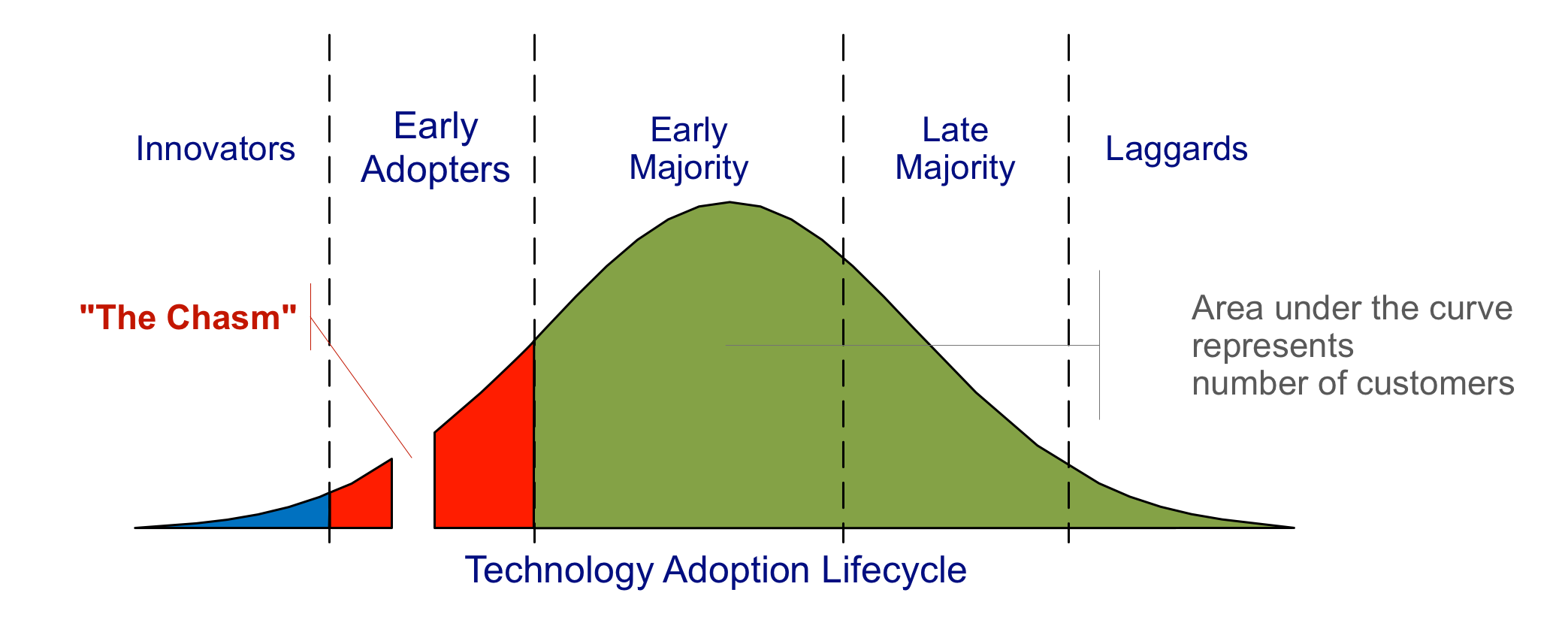
Clearly define your technology2 posture.
- Guinea pigs: Being at the forefront of new technologies can yield revolutionary achievements and boost morale, but it also comes with chaos, ambiguity, and inefficiencies during the journey.
- Fast followers: Waiting for others to iron out the chinks can yield efficiency gains, but this risks being stuck with outdated technology and stifled innovation.
Tips
- What’s your organizational strategy for adopting new technology?
- Choose boring technology.
Lions, field mice, and antelopes
A lion is fully capable of capturing, killing, and eating a field mouse. But it turns out that the energy required to do so exceeds the caloric content of the mouse itself. So a lion that spent its day hunting and eating field mice would slowly starve to death. A lion can’t live on field mice. A lion needs antelopes. Antelopes are big animals. They take more speed and strength to capture and kill, and once killed, they provide a feast for the lion and her pride. A lion can live a long and happy life on a diet of antelope. Tim Ferriss.
Chasing field mice can feel so good that it’s hard to stop. Many engineers become hooked on the short-term dopamine rush from achieving small wins. The danger lies in the slippery slope; they often fail to recognize that they haven’t addressed the more challenging, high-impact tasks until it’s too late.
How to use it
This approach is particularly beneficial when coaching individuals on prioritization, whether it involves time management, focus areas, or specific goals. It can be applied to experienced professionals who are not delivering the expected impact because they tend to concentrate on lower-priority objectives. Additionally, it is useful for managers attempting to juggle too many tasks at once and struggling to focus on a few key priorities. You can also use this method to evaluate your decisions.
Career Tips
- Are you chasing field mice or antelopes?
Conclusion
“I can’t solve this challenge; it’s your problem to tackle,” my report declared. Curious about her perspective, I asked whether it was a “monkey” or a “rock” problem. She confirmed it was a monkey problem. I reassured her, expressing my confidence in her ability to transform that monkey into a rock, and urged her to give it another shot. A few hours later, she returned with a solution.
Each aphorism acts like a cheat sheet, providing insights on approaching challenges and working effectively with your team. From distinguishing between “rocks” and “monkeys” to understanding the “3Ws” of any task, these ideas are designed to foster ownership, boost confidence, and encourage collaboration.
Share your favorite aphorisms in the comments.
Don’t miss the next post!
Subscribe to get regular posts on leadership methodologies for high-impact outcomes.
- There’s no way I’m pet-sitting a monkey – I don’t know what it will eat, what it will do, or how it will behave! ↩︎
- i.e., Tools, frameworks, practices. ↩︎
Discover more from CodeKraft
Subscribe to get the latest posts sent to your email.
